Aerospace education · Dhaka, Bangladesh
Build it.
Test it.
Fly it.
বানাও। ওড়াও। শেখো।
FlightLab Bangladesh makes aviation, aerodynamics and hands-on engineering accessible to students across Bangladesh — one glider, one drone, one question at a time.
- Founder
- Nawshad Uddin
- Based in
- Dhaka, Bangladesh
- We teach
- Aerodynamics, gliders, drones, hands-on engineering
- Launched
- July 2026
Why FlightLab exists
Most students meet flight as a diagram in a textbook: four arrows around an aeroplane. FlightLab turns that diagram into something you can hold, launch, measure and improve.
-
Step 1
Learn the physics
Lift, drag, weight and stability from first principles — with experiments instead of memorised formulas.
-
Step 2
Build the aircraft
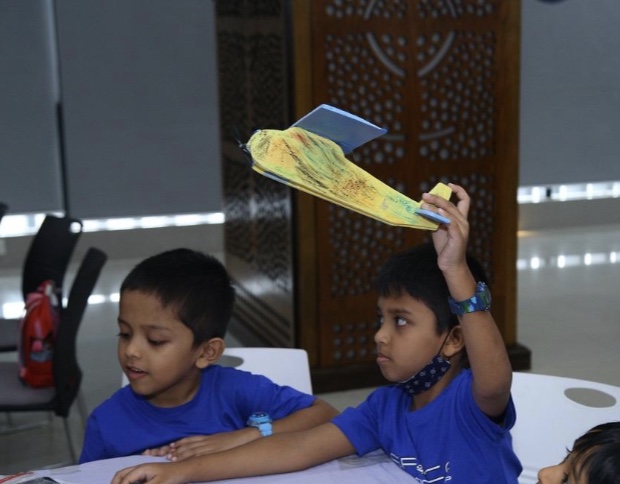
Students design and build their own gliders by hand, making real engineering trade-offs with simple, affordable materials.
-
Step 3
Fly, measure, improve
Every flight is data. Test, write down what happened, change one thing and fly again — the way engineers actually work.
The FlightLab Simulator
Don't take our word for it. Fly one.
Stretch the wings, tilt the nose, add weight. Watch the air respond and see whether your glider flies, sinks or stalls.
Loading…
- Lift
- 0N
- Drag
- 0N
- Weight
- 0N
- Lift ÷ drag
- 0: 1
- Glide from 10 m
- 0m
- Stability
- 0/ 100
Your aircraft
Lift against weight
Challenges
A simplified educational approximation. Lift follows a straight lift curve with a finite-wing correction and an abrupt stall at 11°; drag uses a parabolic polar; the stability score and glide estimate are teaching heuristics, not flight-dynamics results. Air density 1.225 kg/m³, wing chord 0.18 m. Please don't design a real aircraft with these numbers.
Programs
From first question to first flight.
Five connected tracks take a student from "why does it fly?" to launching an aircraft they designed and programming one to fly itself. Every program is free for students.
- P-01
Ground School
The physics of flight from first principles: the four forces, aerofoils, and why aircraft stay stable.
Classroom - P-02
Build Lab
Hands-on glider design and construction with simple materials, real tools and real trade-offs.
Workshop - P-03
Test Range
Launch, measure, record. Students run flight tests and learn to change one variable at a time.
Outdoors - P-04
School Outreach
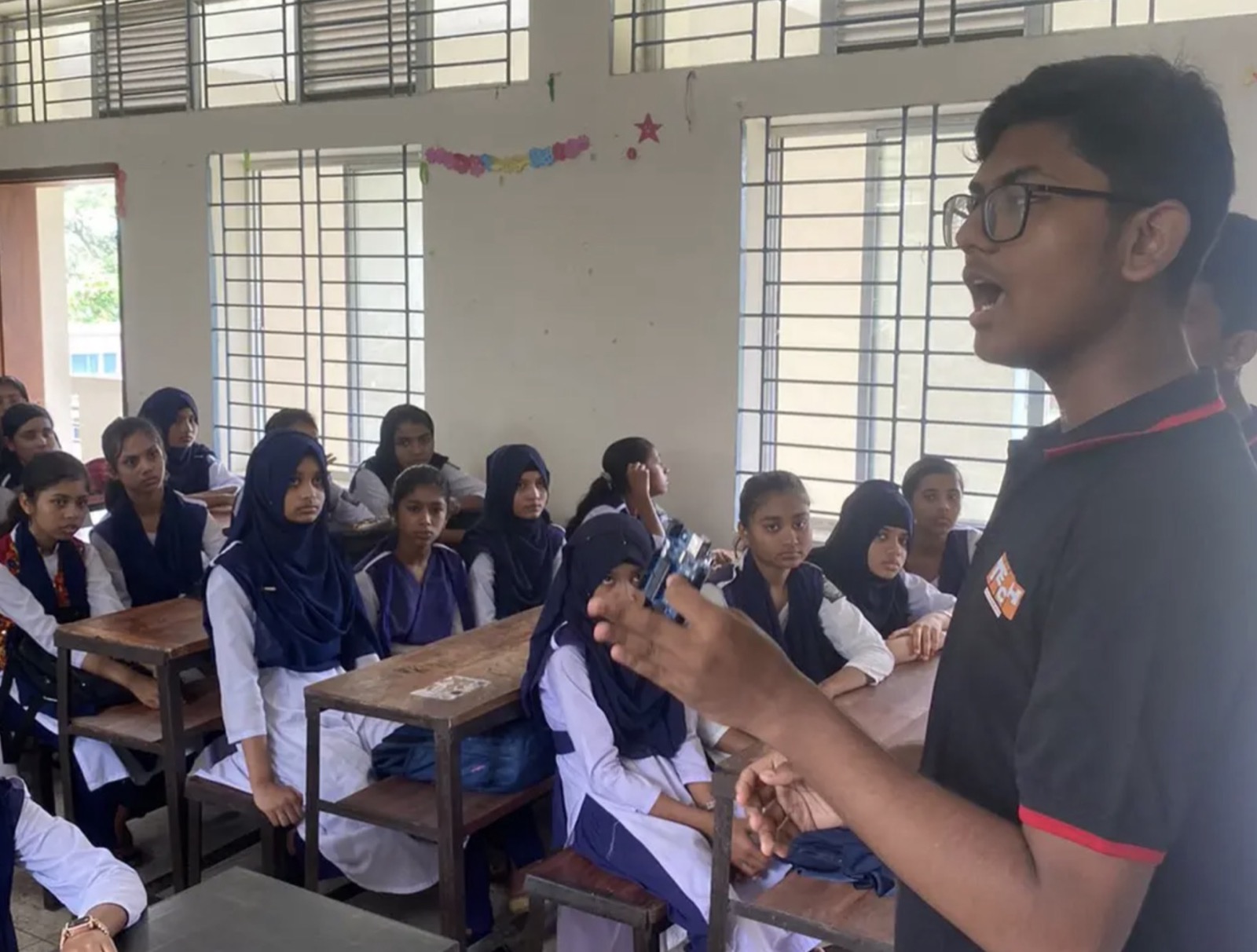
FlightLab sessions brought directly to schools, so access doesn't depend on where a student lives.
On-site - P-05
Drone Lab
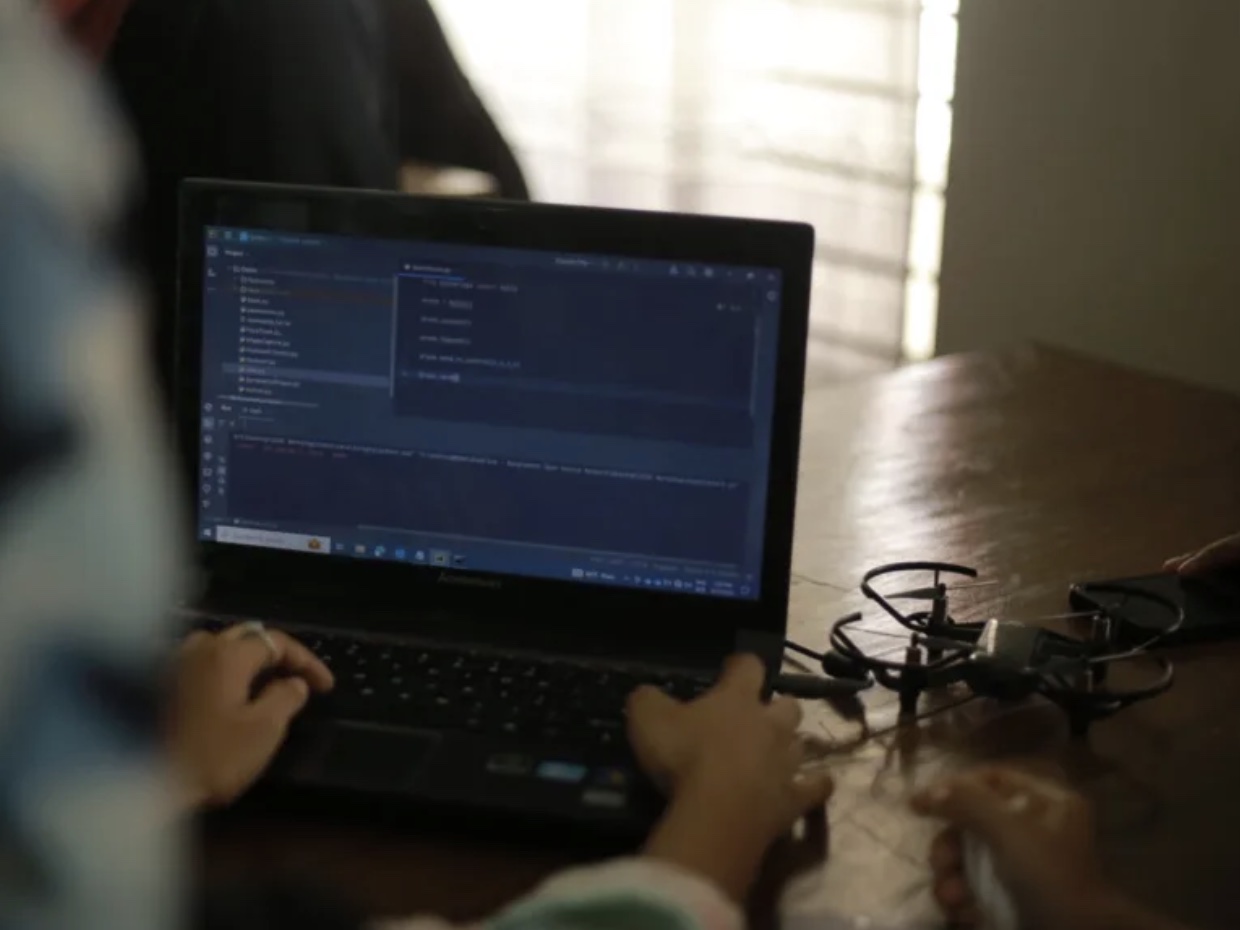
How a quadcopter flies, and how to make one fly itself. Students write their first flight program and test it in the air.
Code + fly

The founder
Every great flight begins with a question.
FlightLab Bangladesh was founded by Nawshad Uddin on a simple conviction: curiosity about flight should be met with tools, not just textbooks — wherever in Bangladesh a student happens to be.
Nawshad Uddin
Founder, FlightLab Bangladesh
Read the founder's storyImpact
Starting in Dhaka. Built for all 64 districts.
Talent is spread evenly across Bangladesh; access to engineering labs is not. Our outreach map tracks every district FlightLab reaches — and only counts activity that has actually happened.
- Students reached
- 180+
- Workshops conducted
- 16
- Districts reached
- 3 of 64
Journal
Flight, explained properly.
- Note 1
How a wing actually makes lift
Forget "the air on top has further to travel". Here's the explanation that survives an experiment.
7 min read - Note 2
Glide ratio: flying on borrowed height
Why an aircraft with no engine can travel twenty times further than it falls.
7 min read - Note 3
The stall, explained without fear
A stall has nothing to do with engines. It's what happens when a wing asks too much of the air.
7 min read - Note 4
How a drone flies without wings
Four motors, no control surfaces, and a computer making hundreds of corrections a second.
7 min read